
Adhd like symptoms vs overload: myths, realities and what your brain really does

You’re in a key meeting, trying to focus on the presentation, but your mind is a whirlwind. You’re simultaneously thinking about the email you forgot to send, what to make for dinner, and a conversation you had yesterday. Later, you find yourself searching for your keys for the third time this morning. You feel scattered, forgetful, and perpetually behind. A thought surfaces, perhaps fuelled by social media trends or a friend’s recent diagnosis: “Could this be ADHD?”
It’s a question many of us in this fast-paced world are asking. The challenge of distinguishing between genuine neurodevelopmental traits and the cognitive strain of modern life is becoming increasingly common. This article is here to explore the complex topic of adhd like symptoms vs overload, offering not diagnoses, but clarity, compassion, and a science-informed perspective to help you understand your own experience.
Understanding the Overload Epidemic
Imagine your brain as a high-performance computer. In our modern world, we have more tabs open than ever before. Notifications ping, deadlines loom, and the pressure to be constantly productive creates a state of chronic cognitive demand. This isn’t just a feeling; it’s a physiological reality. When we are perpetually stressed and overstimulated, our bodies are flooded with hormones like cortisol and adrenaline.
This “fight-or-flight” state, while useful for short-term threats, is draining when it becomes our default mode. It directly impacts the prefrontal cortex—the brain’s executive suite responsible for planning, decision-making, and focus. When this area is compromised by stress, the results can look strikingly familiar:
- Difficulty concentrating: Your focus flits from one task to another without truly landing.
- Forgetfulness: You miss appointments or forget small but important details.
- Emotional dysregulation: You feel irritable, overwhelmed, or quick to anger over minor issues.
- Procrastination: The sheer volume of tasks feels so daunting that starting any of them seems impossible.
For many professionals in dynamic cities like Dubai, this experience is the daily norm. The constant juggling of demanding careers, social obligations, and personal goals creates the perfect storm for cognitive overload, making it difficult to discern the root cause of these struggles.
What Are ADHD-Like Symptoms? A Closer Look
Attention-Deficit/Hyperactivity Disorder (ADHD) is a neurodevelopmental condition, meaning it originates in brain development and is typically present from childhood. It is characterized by a persistent pattern of inattention and/or hyperactivity-impulsivity that interferes with functioning or development. While the experience is unique to each individual, it often involves a different way of processing information and regulating attention.
The core difference in the adhd like symptoms vs overload symptoms debate often comes down to two key factors: chronicity and context. ADHD symptoms are generally lifelong and appear across various settings—at school, at home, and in social situations. Overload, on the other hand, is often situational. Its symptoms might flare up during a stressful work period but significantly subside during a relaxing holiday.
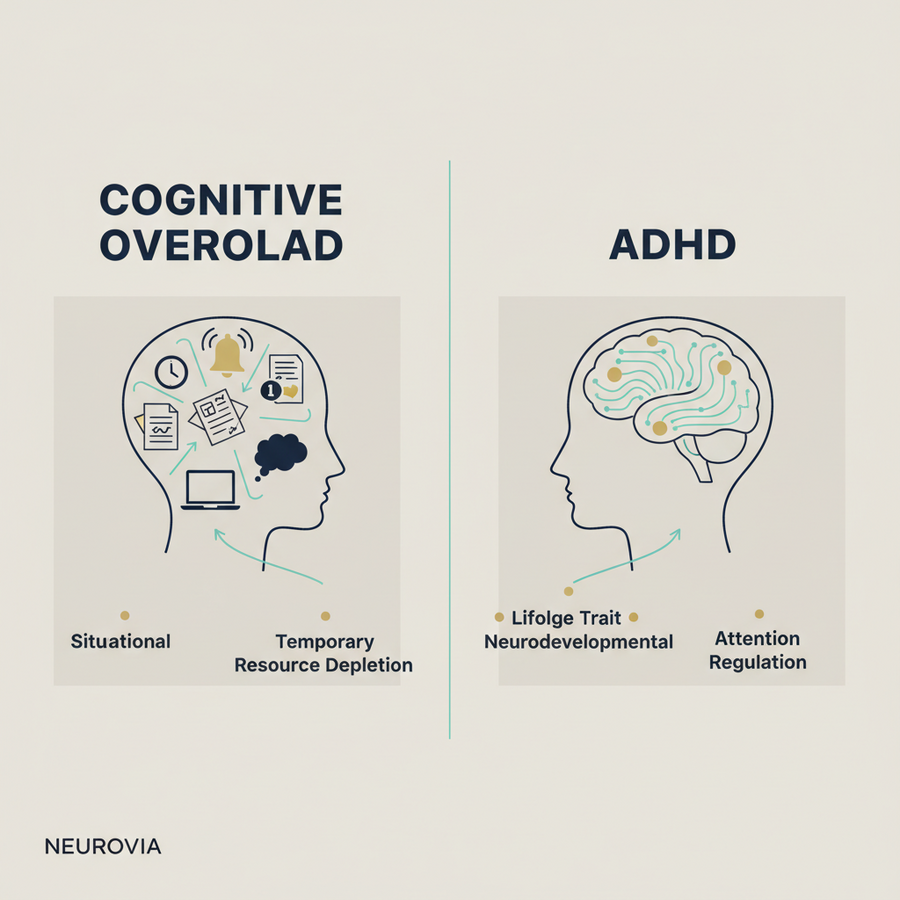
Think back. Did teachers ever comment on your daydreaming or fidgeting as a child? Have you always struggled with organisation, long before your calendar became so crowded? While these are not diagnostic questions, reflecting on the history and context of your symptoms can provide valuable insight.
ADHD-Like Symptoms vs Overload: The Brain’s Perspective
At a neurological level, the similarities and differences become clearer. Understanding the adhd like symptoms vs overload brain connection can help demystify the experience.
Chronic stress and overload put the brain in a state of high alert. This constant stress signaling can disrupt the delicate balance of neurotransmitters, impacting the prefrontal cortex’s ability to function optimally. It’s like trying to run sophisticated software on a computer that is overheating and has its memory completely full. The system slows down, makes errors, and struggles to prioritise tasks.
In a brain with ADHD, the underlying mechanisms are different, though the outward symptoms can appear similar. Research points to differences in the structure and function of brain networks, particularly those involving dopamine and norepinephrine. These neurotransmitters are crucial for regulating motivation, focus, and reward. When these systems function differently, it can lead to the classic challenges of sustaining attention on non-preferred tasks, regulating impulses, and managing executive functions.
So, while overload might create a temporary “deficit” in attention because the brain’s resources are depleted, ADHD involves a more fundamental, persistent difference in how the brain’s attention systems are wired.
Navigating the Grey Area: How to Find Clarity
It’s easy to get lost in this grey area, feeling frustrated and unsure of the next step. The most important thing is to approach this journey with curiosity rather than judgement. Self-diagnosis via online articles can be a tempting but ultimately unhelpful path. True clarity comes from professional assessment.
However, regardless of the underlying cause, there are powerful ways to support your brain and enhance your mental wellbeing. The goal is to reduce cognitive load and build resilience so you can function with greater ease and focus. This is where a proactive approach to mental wellbeing becomes essential. By training your brain to better regulate its own states of arousal and attention, you can improve your ability to cope with daily demands, whether they stem from external pressures or internal wiring.
To explore how NEUROVIA can support your mental wellbeing journey with non-invasive brain training techniques designed to enhance focus and calm, you can visit our services page.
Cultivating Mental Space: Managing ADHD-Like Symptoms vs Overload
The beautiful truth is that many strategies for managing adhd like symptoms vs overload are beneficial for everyone. Creating a lifestyle that supports your brain is a powerful act of self-care. Imagine creating an internal environment of calm and focus, like the serene, clean-lined interior of our Dubai studio, but within your own mind.

Digital Detox and Mindful Tech Use
Our devices are a primary source of overload. Schedule specific times to check emails and turn off non-essential notifications. Creating technology-free zones or times—like the first hour of the morning or during meals—can give your prefrontal cortex a much-needed break.
The Power of Rest and Sleep Hygiene
Sleep is when the brain cleanses itself of metabolic waste and consolidates memories. A lack of quality sleep is devastating for cognitive function. Prioritise a consistent sleep schedule and create a calming, dark, and cool environment, reminiscent of a peaceful desert night sky, to promote deep rest.
Movement as a Mental Reset
Physical activity is one of the most effective ways to improve focus, mood, and executive function. It boosts crucial neurotransmitters and increases blood flow to the brain. Whether it’s a brisk walk, a yoga class, or a session at the gym, find a form of movement you enjoy and make it a non-negotiable part of your routine.
Structuring Your Environment
Externalise your executive functions to reduce mental strain. Use calendars, to-do lists, and reminders consistently. Designate specific places for important items like keys and wallets. By creating external systems, you free up precious mental bandwidth for more complex thinking and creativity.
FAQ
Can a person have both ADHD and be experiencing overload?
Absolutely. In fact, it’s very common. Someone with ADHD may find the demands of a high-stress environment particularly challenging, leading to severe overload or burnout. The strategies for managing overload are therefore doubly important for individuals with ADHD.
If my symptoms improve on vacation, does that mean I don’t have ADHD?
It strongly suggests that environmental stress and overload are significant contributing factors to your symptoms. However, it doesn’t rule out an underlying condition like ADHD. Many people with ADHD also feel better in low-demand environments. The only way to know for sure is through a comprehensive evaluation by a qualified professional.
What is the first step if I suspect I have ADHD?
The best first step is to speak with a medical professional, such as a psychiatrist or a clinical psychologist who specialises in adult ADHD. They can conduct a thorough assessment that includes a detailed history, interviews, and standardised rating scales to provide an accurate diagnosis.
How can NEUROVIA help if I’m just feeling overwhelmed?
NEUROVIA’s approach is centred on brain training and mental wellbeing. Our sessions are designed to help your brain learn to shift into states of calm focus more efficiently. By training neural pathways associated with attention and regulation, we can help you build resilience against stress, improve mental clarity, and enhance your overall quality of life, regardless of the source of your challenges.
Ultimately, the conversation around adhd like symptoms vs overload is less about finding the right label and more about finding the right support for your unique brain. It’s about treating yourself with kindness, understanding your limits, and taking proactive steps to create an inner and outer world where you can thrive.
If you feel ready to experience a session and discover how brain training can support your journey towards greater mental clarity, you can book an appointment here.
Disclaimer: This article is for informational and educational purposes only. It is not intended to be a substitute for professional medical advice, diagnosis, or treatment. Always seek the advice of your physician or other qualified health provider with any questions you may have regarding a medical condition.