
How to recover after intense work period: simple daily practices you can actually keep

The final presentation is sent. The project is launched. The deal is closed. A wave of relief washes over you, vast and immediate. For a moment, it feels like floating in a calm, quiet sea after a storm. But as the hours and days pass, that relief can give way to something else—a deep, resonant exhaustion that sleep doesn’t seem to touch. A strange emptiness lingers where the pressure used to be.
For many ambitious professionals in Dubai, moving from one high-stakes project to the next is the rhythm of life. We celebrate the sprint, but we rarely talk about the vital recovery that must follow. This article is your guide on how to recover after intense work period, not by suggesting a radical life overhaul, but by offering gentle, brain-friendly practices you can weave into your daily life, starting today.
The Echo of Intensity: Understanding Post-Project Depletion
During an intense project, your brain and body operate in a state of high alert. Fuelled by adrenaline and cortisol, your nervous system is primed for performance, problem-solving, and meeting deadlines. This is a powerful and necessary state for achieving incredible things. However, remaining in this state for weeks or months takes a toll. Once the external pressure is removed, the internal system doesn’t always get the memo to power down.
This is when you might notice some common how to recover after intense work period symptoms, which can feel confusing and frustrating:
- Persistent Brain Fog: You find it hard to concentrate on simple tasks, and your thinking feels slow or clouded.
- Emotional Dysregulation: Small annoyances might feel overwhelming, or you might feel a strange sense of numbness and disconnection.
- Profound Fatigue: It’s more than just being tired; it’s a bone-deep weariness that a full night’s sleep doesn’t alleviate.
- A Sense of “Wired and Tired”: You feel physically exhausted but mentally restless, unable to truly relax or switch off. Your mind is still scanning for the next urgent email.
- Loss of Motivation: The thought of starting a new task, even a simple one, feels monumentally difficult.
Recognising these signals is the first, most compassionate step. This isn’t a sign of weakness; it’s a physiological echo of the immense effort you’ve just expended.
Why “Just Relaxing” Isn’t Enough: The Brain’s Perspective
You might be told to “take it easy” or “just relax,” but find yourself sitting on your sofa, scrolling endlessly, feeling just as tense as before. The reason lies in your brain. When we talk about the how to recover after intense work period brain, we’re talking about a nervous system that has been conditioned to be hypervigilant. It has learned that it must be “on” to survive the demands of the project.
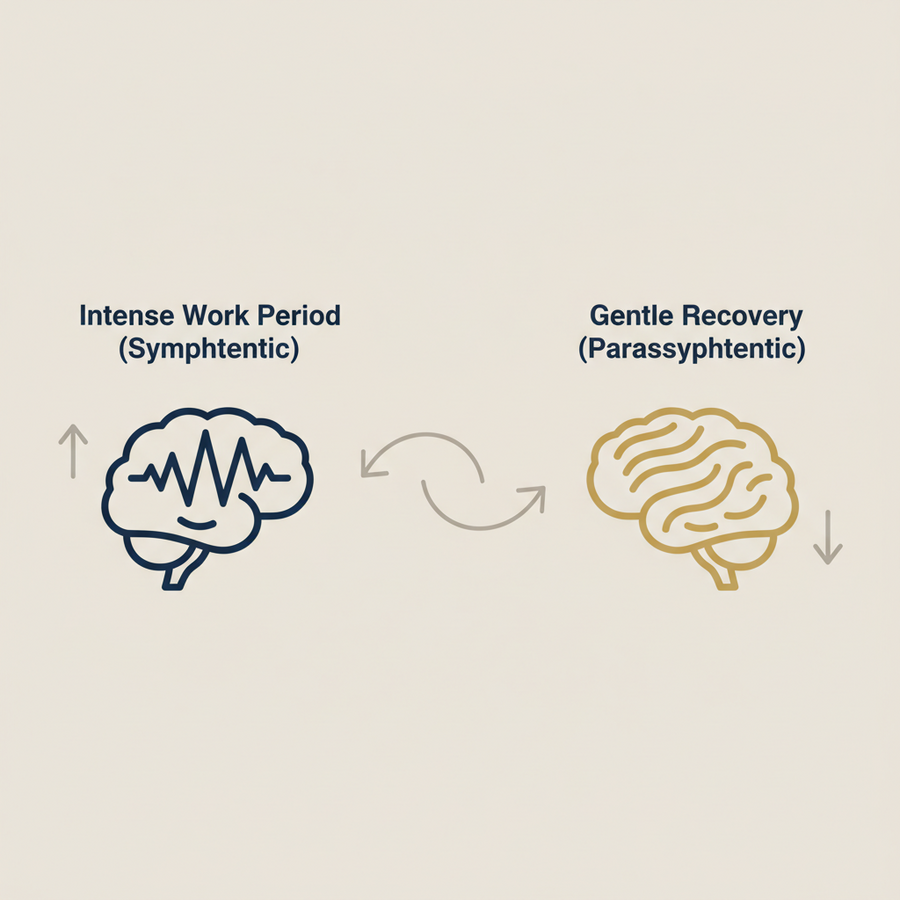
True recovery isn’t a passive state of doing nothing; it’s an active process of down-regulating your nervous system. It’s about sending gentle, consistent signals to your brain that the threat—the deadline, the presentation, the launch—has passed. It’s about consciously shifting from the sympathetic nervous system (your “fight-or-flight” response) to the parasympathetic nervous system (your “rest-and-digest” state). This is where small, intentional practices become more powerful than a week-long vacation where your mind is still running at 100 miles per hour.
Simple Daily Practices for Gentle Recovery
The key to managing how to recover after intense work period is to introduce micro-habits that feel restorative, not like another item on your to-do list. Think of these as quiet invitations to your mind and body to return to a state of balance.
1. The Five-Minute “Nothing” Break
Set a timer for five minutes. Put your phone away, out of sight. Find a window and simply look out at the world—the clean lines of the Dubai skyline, a distant dhow on the water, the shifting colours of the sky. Don’t try to meditate or clear your mind. The goal is simply to do nothing. This practice helps to disengage the brain’s task-focused networks and allows your default mode network—associated with rest and reflection—to come online.
2. Sensory Grounding with Your Morning Coffee
Before you check your emails, take the first few sips of your morning coffee or tea with complete sensory awareness. Feel the warmth of the mug in your hands. Inhale the rich aroma. Notice the taste as it unfolds. This small act of mindfulness anchors you in the present moment, pulling your attention away from the lingering anxieties of past projects or the anticipated stress of the day ahead.
3. Swap High-Intensity for Low-Intensity Movement
Your body is already flooded with stress hormones. A punishing workout can sometimes add more stress to the system. Instead, opt for gentle, restorative movement. A slow walk along the beach at Jumeirah, a stroll through Safa Park, or some simple stretching at home. The goal is to move your body in a way that helps process cortisol, not produce more of it.
4. Curate Your Digital Environment
Your brain interprets every notification ping and email alert as a micro-demand on its resources. Actively create a calmer digital space. Mute work-related app notifications for the evening. Unfollow social media accounts that make you feel anxious or inadequate. Create a playlist of calming, instrumental music—a soundscape that feels like the clean, serene atmosphere of a quiet studio, with tones of soft gold and deep, restful navy.
At NEUROVIA, we help clients build the resilience and mental clarity needed to navigate these demanding cycles. Our approach, including advanced neurofeedback techniques, supports your brain’s natural ability to regulate itself, making recovery more efficient and sustainable. To explore how NEUROVIA can support your mental wellbeing, you can visit our services page.
Rebuilding Your Foundation: Sleep, Nourishment, and Connection
While the daily practices above create immediate pockets of calm, reinforcing your foundational pillars of wellbeing is crucial for long-term recovery.
Prioritising a Wind-Down Routine
The hour before sleep is sacred. This is your opportunity to signal to your brain that the day is over. Dim the lights in your home to a soft, warm glow. Avoid screens, as their blue light can interfere with melatonin production. Read a physical book, listen to a calming podcast, or take a warm bath. This ritual is a clear boundary between the demands of the day and the restorative peace of the night.
Mindful Nourishment
When you’re exhausted, it’s easy to reach for quick-energy foods or eat distractedly while working. Try to have at least one meal a day sitting at a table, without a screen. Pay attention to the flavours and textures of your food. This not only aids digestion but also turns a biological necessity into another opportunity for mindful presence.
Re-engaging with Your World
Intense work can be isolating. Make a conscious effort to reconnect with people you care about. The key is to connect on a human level, not just a professional one. Call a friend to talk about a book you read or a movie you saw. Have dinner with your family and make a rule: no work talk. This reminds your brain that your identity is richer and more varied than just your last project.

FAQ: Your Questions on Post-Project Recovery
How long does it take to recover after an intense work period?
There is no universal timeline, and it’s important to release any pressure for a “quick fix.” Recovery depends on the intensity and duration of the work period, as well as your individual nervous system. The focus should be on the consistency of your gentle practices, not on a deadline to feel “better.” True recovery is a gradual unfolding, not a finish line to be crossed.
I feel guilty for not being productive. How do I manage this?
This is an incredibly common feeling among high-achievers. The key is to reframe your perspective on rest. Rest is not the absence of productivity; it is an integral part of the performance cycle. Your brain needs this downtime to consolidate learning, clear out metabolic waste, and restore the resources needed for creativity and complex problem-solving. See this recovery period as a strategic investment in your future performance.
What’s the difference between this kind of exhaustion and burnout?
Post-project depletion is typically an acute state linked to a specific, demanding period. With proper recovery, your energy and motivation will gradually return. Burnout, as defined by the World Health Organization, is a more chronic state of emotional, physical, and mental exhaustion caused by prolonged and excessive stress. While different, repeatedly ignoring the need to recover after intense periods can be a significant contributing factor to developing burnout over time.
Can brain training help with this kind of recovery?
Yes, brain-training modalities like those offered at NEUROVIA can be highly effective. Techniques such as neurofeedback work by providing your brain with real-time feedback on its own activity. This helps guide it out of stuck patterns of stress and hyper-arousal and back towards a state of calm, flexible regulation. It’s a gentle yet powerful way to support and accelerate your brain’s natural recovery process.
True recovery is an act of acknowledging your effort and honouring your body’s need for rest. It’s about returning to yourself, one quiet moment at a time. If you are ready to take an active role in your mental wellbeing and explore a supportive path to greater balance, we invite you to experience what NEUROVIA has to offer. If you feel ready to experience a session, you can book an appointment here.
Disclaimer: The information in this article is for educational and informational purposes only and is not intended as a substitute for professional medical advice, diagnosis, or treatment. Always seek the advice of your physician or other qualified health provider with any questions you may have regarding a medical condition.